Inbound Marketing and Outbound Marketing: which is the best strategy?
 By weboost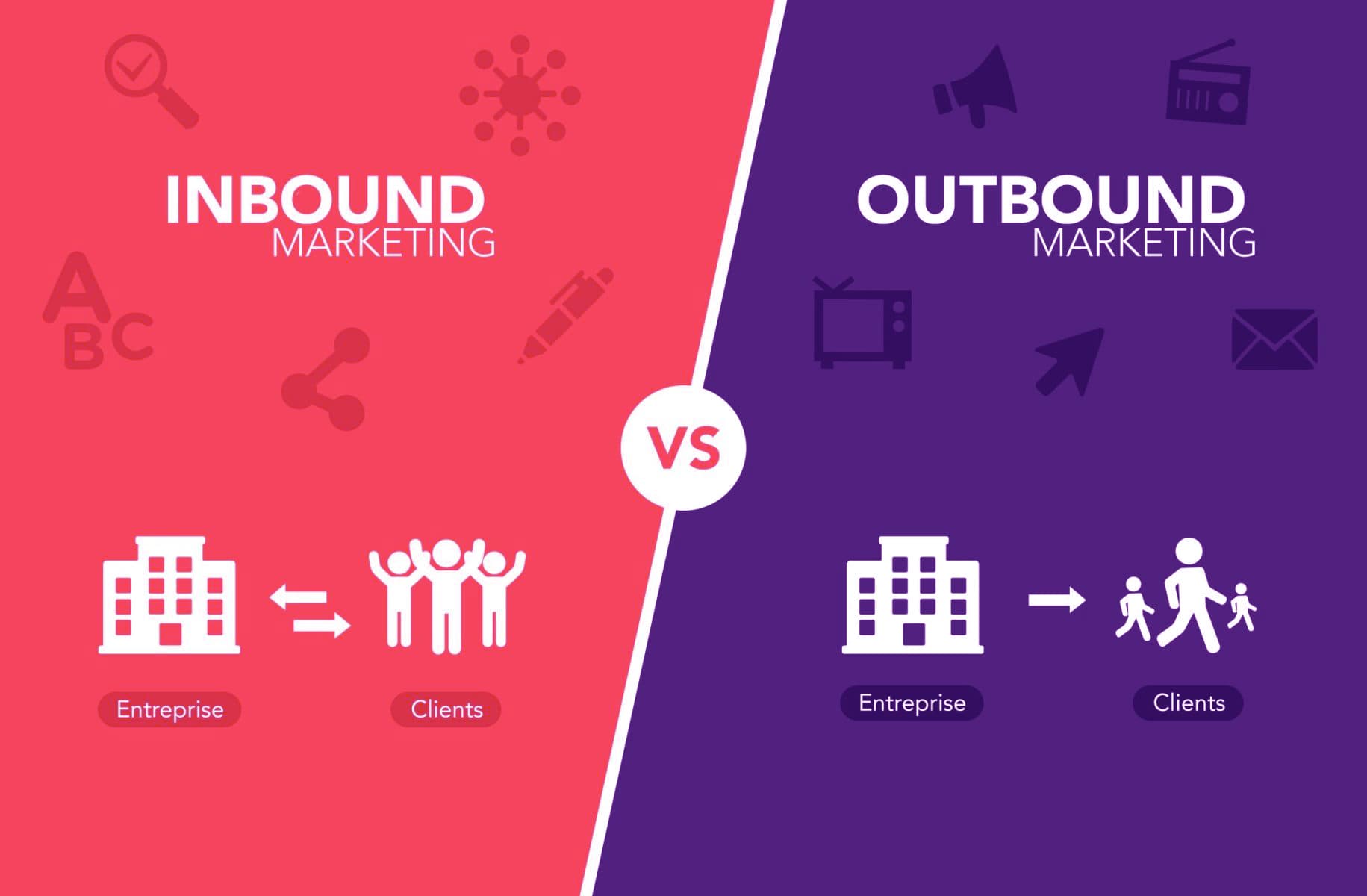
Inbound Marketing and Outbound Marketing
which is the best strategy?
In this article we will address the emergence and growing importance of Inbound Marketing, as well as the concept of Outbound Marketing and the complementarity between the two concepts.
With the growth of Marketing on digital platforms and the increase in the volume of ads by companies, consumers began to gain awareness and learned to “switch off” from those ads, feeling they were invasive. As a result, companies were forced to create a different type of strategy to capture the attention of their target audience.
The strategy was the creation and adoption of Inbound Marketing. The term Inbound Marketing was developed by HubSpot in 2006, as “An approach focused on attracting customers through content and interactions that are helpful and relevant.”
What is Inbound Marketing?
The main objective of Inbound Marketing is the attraction and loyalty of customers.
Attraction is achieved through the development of attractive and relevant content for your target audience. To define the content to be shared, it is necessary to know your target audience well — their interests, desires and doubts — in order to showcase your Product so that it is chosen as the solution to your potential customers’ problems.
In Inbound Marketing the customer goes through a buying journey of 4 phases: Attraction, Conversion, Closing and Delight.

Attraction – Currently, 93% of searches are done online, so your potential customers will search online for the solution your Product offers. In order for your brand to be found, you should develop content through a blog, use the keywords that match your potential customers’ search keywords on your website so that its SEO is optimised, and share attractive content on Social Media to create interaction with your followers and increase your website traffic.
Conversion – After attracting your potential customers to your website, the goal is conversion — that is, turning the visitor into a Lead by obtaining information about them. This is done through e-books, webinars, infographics, Landing Pages exclusively designed to gather information, contact forms and call-to-actions that stimulate conversion.
Closing – At this stage the goal is to nurture the Lead until they become a customer through e-mails supported by CRM tools and Marketing automation so that the customer understands that their problem will be solved with your company’s solution.
Delight – After the purchase, the goal is to delight the customer with the experience of using your Product. This happens if your brand delivers on what it promised and, if possible, exceeds the customer’s expectations. If the customer is delighted with your Product, they will certainly recommend it to their network of contacts (word-of-mouth Marketing), which increases your brand’s notoriety and the likelihood of boosting your sales.
What is Outbound Marketing?
If in Inbound Marketing the company produces content to capture the customer’s attention, in Outbound Marketing the strategy involves the massive diffusion of the brand and the active search for new customers.
Before the digital boom that occurred in recent years, the channels used were billboards, TV, radio, newspapers and magazines.
Nowadays, given the advantages that digital channels offer, the platforms used are Facebook, Google and LinkedIn, along with banner ads on websites/blogs and e-mail marketing.
Despite the growth of Inbound Marketing, Outbound Marketing has not lost its importance — the big difference is that there has been a shift in the actions taken by companies.
This was one of the reasons that led to the creation of Weboost — to help its clients communicate across various platforms to the right target audience in order to generate sales.

Both Inbound Marketing and Outbound Marketing have positive as well as negative points. The great advantage is that the two strategies complement each other, which is why we, Weboost, advise each company to define its budget and invest in both strategies in order to gain notoriety in the market and generate sales both in the short and long term.
Having difficulty deciding which strategy is best for your company?
Talk to us, we certainly have the solution that will bring you results!